Shoulder Impingement Treatment Birmingham — Pain Relief & Full Recovery
Expert diagnosis, physiotherapy, injections and keyhole surgery near Birmingham at Droitwich Knee Clinic. 20 min from Birmingham. No GP referral needed.
Home → Shoulder Impingement Treatment Birmingham
Advanced Diagnostic Assessment
Accurate testing and imaging identify shoulder impingement early, ensuring precise diagnosis and effective treatment planning for faster recovery.
Services
KNEE PAIN INJECTION
Knee Replacement
Shoulder Pain Injections
Shoulder Impingement treatment
acn Reconstruction
Rotator cuff repair
painless injection treatment
ROBOTIC Knee Replacement
MSK ULTRASOUND SCAN
Overview of Shoulder Impingement Treatment
Expert treatments relieve shoulder pain, reduce inflammation, and restore mobility, helping patients return to daily activities with personalised care and support.
Expert Shoulder Impingement Treatment in Birmingham

Shoulder pain is one of the most common musculoskeletal problems in the UK, and shoulder impingement syndrome is often the cause. This condition occurs when the tendons of the rotator cuff become trapped or compressed within the subacromial space during shoulder movement leading to pain, stiffness, and reduced mobility. Everyday tasks such as lifting your arm, reaching overhead, dressing, or sleeping on the affected side can become increasingly difficult.
At Droitwich Knee Clinic, just 20 minutes from Birmingham, Mr. Kirti Moholkar, Consultant Orthopaedic Surgeon, provides expert Shoulder Impingement Treatment Birmingham offering a full range of diagnostic, non-surgical, and surgical options. With decades of orthopaedic expertise, we help patients across Birmingham and the West Midlands relieve pain, restore shoulder function, and return to normal life.
Why Treat Shoulder Impingement Early?
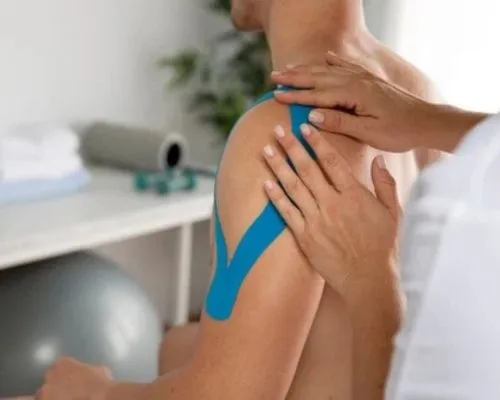

Many patients try to live with shoulder pain, but untreated Shoulder Impingement Treatment Birmingham can worsen over time sometimes progressing to a full rotator cuff tear, frozen shoulder, or chronic arthritis. Seeking treatment early provides the best chance of full recovery without surgery.
- Relief from pain, aching, and night-time discomfort
- Improved strength, range of movement, and daily function
- Reduced risk of long-term tendon damage or rotator cuff tears
- Faster return to work, driving, sport, and daily activity
Shoulder Impingement — Diagnosis and Tests

Accurate diagnosis is essential before recommending Shoulder Impingement Treatment Birmingham. At Droitwich Knee Clinic we use a combination of clinical tests and imaging to confirm shoulder impingement and identify its exact cause.
🩺 Clinical assessment
Hawkins-Kennedy, Neer, and rotator cuff strength tests to identify impingement pattern.
🔬 MSK ultrasound
Real-time imaging of tendons, bursae, and soft tissue. Same-visit results. Available on site.
🧲 MRI scan
Detailed imaging of tendons, cartilage, and bone for advanced or complex cases.
Shoulder Impingement Treatments We Offer near Birmingham
We provide a full spectrum of evidence-based Shoulder Impingement Treatment Birmingham options, always starting with the most conservative approach and progressing only when needed.
🏃 Physiotherapy
- Rotator cuff strengthening exercises
- Scapular stabilisation programme
- Postural correction and movement retraining
- Manual therapy and soft tissue work
💉 Injections
- Steroid (cortisone) injection for fast relief
- Hyaluronic acid (gel) injection for lubrication
- PRP (platelet-rich plasma) for tendon healing
- Ultrasound-guided injection available
⚡ Shockwave therapy
- For chronic tendon irritation
- Stimulates healing without surgery
- Course of sessions recommended
- No anaesthetic or downtime needed
🔬 Keyhole surgery
- Arthroscopic subacromial decompression
- Removal of inflamed tissue and bone spurs
- Can be combined with rotator cuff repair
- Day case go home same day
Conditions Shoulder Impingement Treatment Helps

- Primary subacromial impingement
- Posterior impingement (athletes)
- Subacromial bursitis
- Frozen shoulder vs impingement
- AC joint impingement and arthritis
- Secondary impingement
- Internal impingement
- Rotator cuff tendonitis
- Nerve impingement with tingling
- Partial rotator cuff tears
Risks & Side Effects of Shoulder Impingement Treatments
- Steroid flare: Temporary pain increase 24–48 hours after cortisone injection normal, settles with ice and rest
- Shockwave therapy: May cause mild redness or soreness temporary and expected
- Surgery risks: Small risks of stiffness, infection, or incomplete pain relief rare with experienced arthroscopic surgeons
- All risks are explained clearly at consultation and the safest appropriate approach always recommended first
When Surgery for Shoulder Impingement Might Be Needed

Most patients respond well to physiotherapy, injections, and activity modification. Shoulder Impingement Treatment Birmingham is considered if pain persists despite several months of non-surgical care, MRI shows advanced tendon or bone changes, or pain significantly prevents daily life, work, or sport.
We specialise in arthroscopic (keyhole) Shoulder Impingement Treatment Birmingham performed through tiny incisions with a camera, offering faster recovery than traditional open surgery. Most patients go home the same day.
Recovery and Post-Treatment Care
After injection
24–48 hours rest
Then resume gentle activity. Steroid relief begins in 1–3 days.
After physiotherapy
Weeks to months
Commit to the exercise programme for long-term improvement.
After keyhole surgery
3–6 months full recovery
Sling for a short period, then guided rehabilitation. Light activity within 6–8 weeks.
Frequently Asked Questions
It is when the rotator cuff tendons are compressed within the shoulder joint, causing pain and reduced mobility.
Through clinical tests for shoulder impingement and imaging such as MRI or ultrasound.
Mild cases may improve with rest, but most patients need physiotherapy or injections for long-term relief.
Targeted strengthening and mobility exercises prescribed by a physiotherapist – avoid overhead heavy lifting until cleared.
If physiotherapy, steroid injections, and lifestyle changes fail to provide relief.
Most patients return to light activity in 6–8 weeks, with full recovery in 3–6 months.
Gentle swimming can help some patients, but avoid overhead strokes until cleared by your physiotherapist.